

Camry vs. Corolla: Which Sedan Fits You?

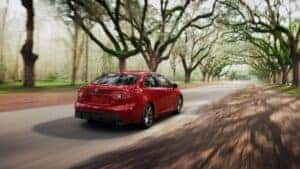
Photo Source/Copyright: Toyota
Park them side by side, and the family resemblance is obvious. Both carry Toyota’s reputation for outlasting car loans without complaint. Yet despite looking like small and medium cuts from the same cloth, the Camry and Corolla cater to distinct routines and budgets. The Camry is now exclusively a midsize hybrid, whereas the compact Corolla offers gas or hybrid powertrains.
Size, Space, and Daily Parking
The tape measure tells the real story: the Camry is eleven inches longer. In crowded garages, the Corolla slips neatly into tight spaces that force Camry drivers into a three-point turn.
Slide inside, though, and the Camry earns every inch. That stretched wheelbase gives rear passengers genuine breathing room and provides a trunk that easily takes sports gear or bulky luggage.
| Specification | Camry | Corolla |
|---|---|---|
| Vehicle Class | Midsize Sedan | Compact Sedan |
| Overall Length | 193.5 in. | 182.5 in. |
| Wheelbase | 111.2 in. | 106.3 in. |
| Rear Legroom | 38.0 in. | 34.8 in. |
| Trunk Cargo Space | 15.1 cu. ft. | 13.1 cu. ft. |
| Starting MSRP* | $29,700 | $23,325 |
*Starting MSRP excludes destination fee.
Powertrains and Fuel Economy
Toyota eliminated gas-only Camry vehicles for this generation. Every trim is a hybrid, pushing 225 horsepower in front-wheel drive (FWD) or 232 horsepower with all-wheel drive (AWD), while returning an estimated 51 miles per gallon (MPG) combined on the LE variant.
The Corolla leaves the choice to you:
- 2.0-liter Gas Engine: 169 horsepower and 151 pound-feet of torque, earning 35 MPG combined for simple commuting.
- 1.8-liter Hybrid: 138 horsepower paired with an electronic Continuously Variable Transmission (eCVT), earning 50 MPG combined with optional AWD.
The midsize Camry LE matches the Corolla Hybrid’s 50 MPG ballpark while delivering nearly 90 extra horses under your right foot.
Cabin Tech and Standard Safety
Entry trims skip the cheap feel. Both cars start with an 8-inch touchscreen with wireless Apple CarPlay and Android Auto. Upper trims offer a 10.5-inch display on the Corolla and a 12.3-inch gauge cluster on the Camry.
Toyota Safety Sense 3.0 and blind-spot monitoring come standard across both lineups:
- Pre-Collision System with Pedestrian Detection
- Full-Speed Dynamic Radar Cruise Control
- Lane Departure Alert with Steering Assist
- Road Sign Assist and Proactive Driving Assist
Trims, Pricing, and Which Fits You
A gas Corolla starts at $23,325 MSRP (excluding destination fee), while the Corolla Hybrid begins at $25,175 MSRP (excluding destination fee). The Camry LE opens at $29,700 MSRP (excluding destination fee). Every Corolla configuration, including the top Hybrid XLE, starts below an introductory-level Camry.
Pick the Corolla if you commute solo, park on tight streets, or want lower payments. Choose the Camry if you haul adults, take road trips, or need more passing muscle.
Frequently Asked Questions
Q: Is the Camry much roomier inside?
A: Yes. You get 3.2 inches more rear legroom and two extra cubic feet of trunk room.
Q: Do either of these hybrids need a plug?
A: No. Both are conventional self-charging hybrids that charge automatically while driving.
Q: Can you get all-wheel drive on both?
A: AWD is available across all five Camry trims, while the Corolla limits AWD to its Hybrid LE and SE trims.
Schedule Your Test Drive
Specs on a screen only tell part of the story. Schedule a back-to-back test drive today to feel the differences from behind the wheel.