

Top Airbag Warning Light Repair Tips
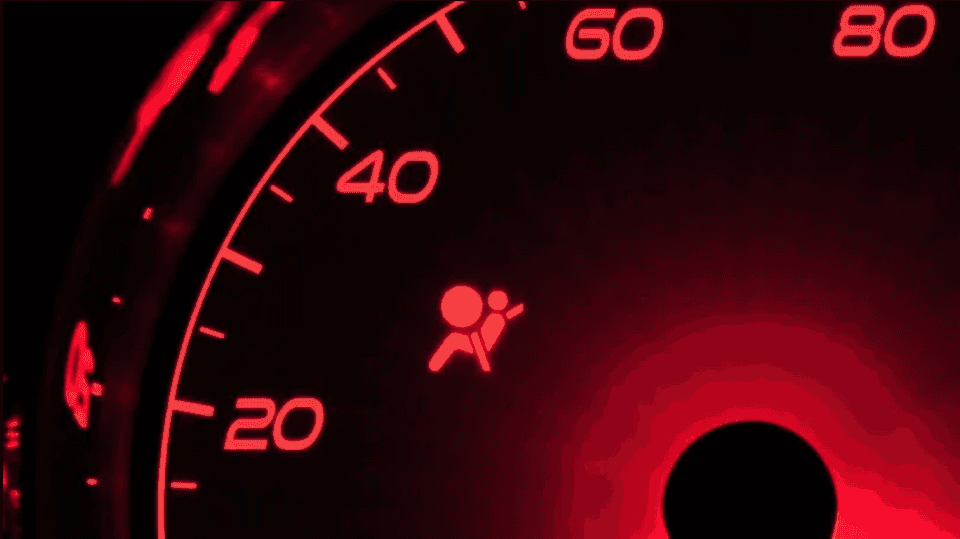
Photo Source/Copyright: Edmunds
The Supplemental Restraint System (SRS) uses a dashboard lamp to indicate faults detected by its self-monitoring circuit. Is fixing an airbag warning light a straightforward process? Fortunately, modern diagnostics make resolving SRS issues remarkably efficient once a technician inspects the system. That said, the vehicle still drives normally, which is exactly why the warning gets delayed. Resolving it starts with reading the fault codes stored in the vehicle’s restraint control module.
What the Airbag Warning Light Means
Federal safety rules require any occupant protection system that deploys in a crash to carry a readiness indicator visible from the driver’s seat. That indicator is the airbag warning light. A brief illumination at startup is normal, as the system is running a bulb check and a self-test. Illumination that persists past those few seconds is not.
This lamp is separate from the PASSENGER AIRBAG OFF indicator, which reports occupant classification status during normal system operation.
Common Causes of an Illuminated SRS Light
The restraint module watches circuits throughout the vehicle: the steering column, the front seats, the belt hardware, and its own internal memory. A fault anywhere in that network illuminates the lamp.
The causes fall into two groups: circuits that have lost continuity and stored conditions that the module refuses to release. Which group applies determines everything about the repair, which is why guessing at the cause is rarely productive or economical.
- Clock spring: a ribbon connector in the steering column that can break with use, often taking the horn and wheel controls with it
- Occupant classification sensor: seat-based sensing that determines passenger airbag status
- Seat belt pretensioner or buckle switch: monitored restraint components that set codes when circuits open
- Wiring and connectors: under-seat harnesses that loosen when seats are moved or cleaned
- Low system voltage: a weak or disconnected battery can store a fault that the module retains
- Stored crash data: a module that has recorded a deployment event stays locked until serviced
How Technicians Diagnose the Fault
The standardized data set that inexpensive code readers access was defined for emissions diagnostics. Restraint faults are different: they’re stored as manufacturer-defined body codes inside a separate control module. A basic reader can therefore report no codes at all while the warning light is still lit.
Diagnosis requires a scan tool with restraint-system coverage for that specific vehicle make. Retrieving a code is the beginning of diagnosis, not the end. A technician verifies the indicated circuit before replacing anything, checking continuity, connector seating, and resistance against the manufacturer’s specifications.
What Airbag System Repair Involves
Scope follows the fault. A loose connector may need nothing more than reseating and a code clear. A module holding crash data won’t release it, regardless of how long the battery sits disconnected.
The system also stores reserve energy in a capacitor that can power the device even when the battery is disconnected entirely, which is why restraint work belongs in a shop rather than a driveway. Clearing a code without correcting the cause only returns the lamp at the next ignition cycle and self-test.
| Likely Fault | Typical Repair Scope |
|---|---|
| Clock spring | Replace the rotary connector; the steering wheel must be centered before installation |
| Seat or floor harness connector | Reseat or repair the connector and address any corrosion |
| Occupant classification sensor | Service the seat sensing components, then recalibrate the system |
| Pretensioner or buckle switch | Replace the component under the pyrotechnic handling procedures |
| Module holding crash data | Replace the module or apply manufacturer-approved reprogramming |
Why the Light Should Not Be Ignored
When a critical fault is active, the module generally places the restraint system in a fail-safe state. In practice, airbags and pretensioners may not deploy in a collision. The likelier failure is a system that does nothing, not one that fires unprompted.
Nothing about the way the vehicle drives will tell you this has happened. That silence is what makes the warning easy to postpone.
Frequently Asked Questions
Q: Can I drive with the airbag light on?
A: The vehicle operates normally, but restraint deployment may be disabled. Have the system diagnosed before driving.
Q: Will the airbag light reset itself?
A: No. The stored fault remains until the underlying problem is repaired and the code is cleared.
Q: Does an airbag light fail a safety inspection?
A: Treatment varies by state. Check New York’s current inspection requirements before scheduling.
Q: Can a weak battery trigger the airbag light?
A: Yes. A low system voltage can cause a fault that persists after the battery is replaced.
Schedule Airbag System Service
Restraint system diagnosis calls for make-specific scan tools and technicians trained to handle pyrotechnic components safely. If the airbag warning light is on in your vehicle, our service team can identify the fault and restore the system. Schedule your expert safety inspection and service appointment today.
More From NYE Toyota
What To Know About Electric Toyota Cars
Photo Source/Copyright: Toyota If you walk onto a dealership lot searching for a sleek electric Toyota sedan, you’ll end up empty-handed. Toyota bet entirely on crossovers for its U.S. battery-electric lineup. That isn’t a drawback; it means command-of-the-road seating, practical hatchbacks, and available all-wheel drive (AWD) across the board. The current lineup centers on…
Corolla LE vs. SE: Which Fits You?
Photo Source/Copyright: Edmunds Choosing between the Toyota Corolla LE and SE often trips up buyers because both sedans share the exact same underlying powertrain. Under the hood of each trim sits a 2.0-liter Dynamic Force four-cylinder engine generating 169 horsepower and 151 pound-feet of torque. That power travels through a Dynamic-Shift Continuously Variable…
Top Facts About The Toyota Hydrogen Engine
Photo Source/Copyright: Battery power grabbed every headline for a decade, but Toyota quietly funded a parallel route to zero emissions: one that fills at a pump instead of a plug. That engineering work hasn’t slowed down. In fact, it has accelerated, and the hardware coming out of the lab sits miles away from…