

Why Toyota Dynamic Cruise Control Changes Driving
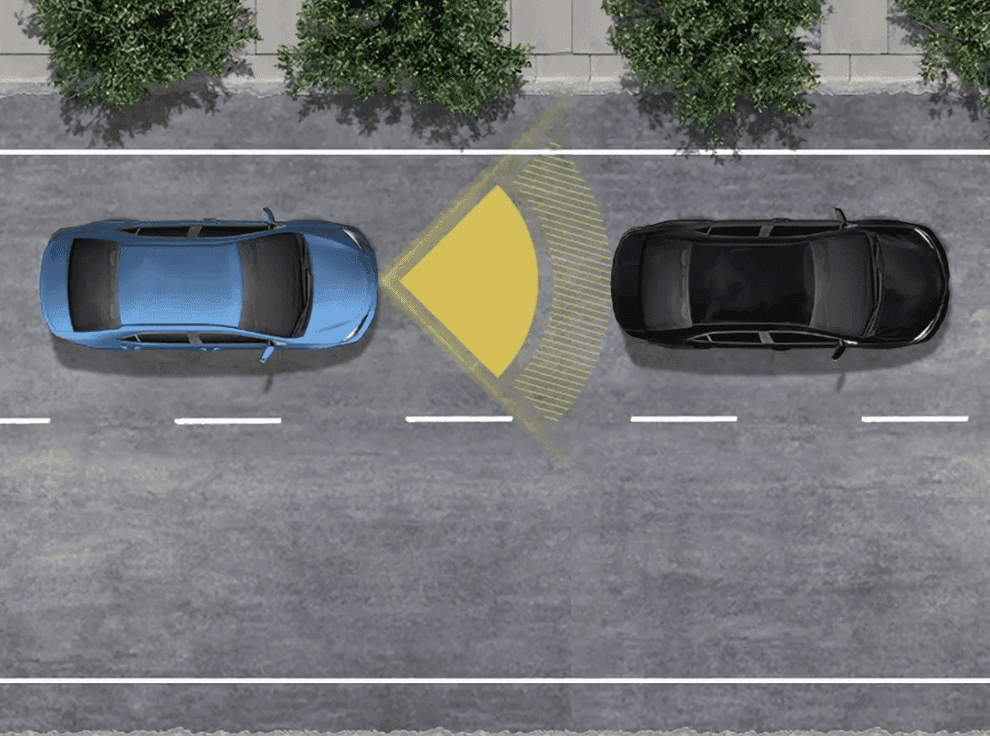
Photo Source/Copyright: JD Power
You know the interstate accordion effect: you set your cruise at 70 miles per hour (MPH), but the car ahead drifts to 62 MPH, crawls back up, and drops again, leaving you tapping the brake and resetting cruise constantly. It is exhausting. Toyota’s answer is Dynamic Radar Cruise Control, often shortened to DRCC, though most drivers just drop “radar” and call it dynamic cruise.
What the System Actually Does
At its core, DRCC handles pacing so your right foot gets a break. You pick a cruising speed, select a following gap, and let the vehicle sort out throttle and braking. When traffic bogs down ahead, your Toyota slows down automatically to match the flow. When the lane clears, it climbs back to your preset speed without you touching a pedal.
Toyota bundles the feature across virtually the entire lineup via Toyota Safety Sense (TSS). You won’t have to comb through option sheets; the controls sit right on the steering wheel, ready for the open highway.
How the Tech Reads the Road
Older setups relied strictly on bumper radar. Modern TSS platforms use a dual-sensor layout: a millimeter-wave radar behind the front emblem paired with a camera mounted high inside the windshield. On Toyota Safety Sense 3.0 models, those sensors feature a wider field of view and longer forward range.
A few practical operational details stand out:
- Following distance: four gap settings adjustable on the fly via dedicated steering wheel buttons.
- Stop-and-go capability: automatic-transmission models track traffic down to a dead halt; a tap of the RES button or gas pedal gets you rolling again once traffic moves.
- Curve speed management: equipped models read bends in the road and shave off speed entering turns before resuming your target speed on corner exit.
Dropping Back to Classic Cruise
What happens when wet winter slush packs against your front grille, blinding the radar? Rather than leaving you stranded without cruise control, Toyota includes a built-in fallback: standard constant-speed cruise.
To switch, ensure the cruise system is off, then press and hold the cruise main button for two seconds. The instrument cluster icon swaps from the distance-gap graphic to a classic fixed-speed speedometer icon.
It serves as a handy workaround for foul-weather runs, even if you lose distance-pacing until you rinse off the front sensor. (BMW owners will find that toggle familiar, an overlap shared with the BMW-co-developed GR Supra before production wrapped in March 2026).
| Feature | Dynamic Radar Cruise Control | Constant-Speed Mode |
|---|---|---|
| Holds set speed | Yes | Yes |
| Slows for traffic ahead | Yes | No |
| Follows to a stop | Yes (automatics) | No |
| Best scenario | Daily highway traffic | Blocked sensors in snow or road grime |
Where DRCC Excels
DRCC proves its worth during long interstate runs and stop-and-go commuter slogs, cutting fatigue by removing the micro-adjustments of highway spacing.
Keep in mind, this is driver assistance, not autonomous driving. Toyota tunes braking inputs to remain smooth and gradual. That makes for comfortable touring, but it won’t compensate for inattention if someone cuts sharply into your bumper, and if you row your own gears in a manual Tacoma or GR Corolla, you get highway pacing, but stop-and-go clutch work remains entirely yours.
Quick Common Questions
Q: Does every model offer full stop-and-go?
A: Nearly all automatics do; manual models utilize highway-speed adaptive cruise.
Q: Does it steer?
A: DRCC only governs speed and headway. Pair it with Lane Tracing Assist, though, and the car helps keep you centered whenever lane markings are visible.
Nothing beats experiencing the system on real asphalt. Swing by the showroom, grab a set of keys, and test-drive it on the nearest highway stretch.
More From NYE Toyota
Explore The Full Toyota Sedan Model Lineup
Photo Source/Copyright: Toyota Plenty of automakers quietly walked away from four-door cars. Toyota didn’t. Its current sedan lineup covers four distinct roles, from a straightforward compact commuter to a lifted, all-wheel-drive (AWD) flagship that looks like nothing else in the parking lot. Outside of a single gas-only trim, everything runs on hybrid power,…
What To Know About Electric Toyota Cars
Photo Source/Copyright: Toyota If you walk onto a dealership lot searching for a sleek electric Toyota sedan, you’ll end up empty-handed. Toyota bet entirely on crossovers for its U.S. battery-electric lineup. That isn’t a drawback; it means command-of-the-road seating, practical hatchbacks, and available all-wheel drive (AWD) across the board. The current lineup centers on…
Corolla LE vs. SE: Which Fits You?
Photo Source/Copyright: Edmunds Choosing between the Toyota Corolla LE and SE often trips up buyers because both sedans share the exact same underlying powertrain. Under the hood of each trim sits a 2.0-liter Dynamic Force four-cylinder engine generating 169 horsepower and 151 pound-feet of torque. That power travels through a Dynamic-Shift Continuously Variable…