

Top Facts About The Toyota Hydrogen Engine
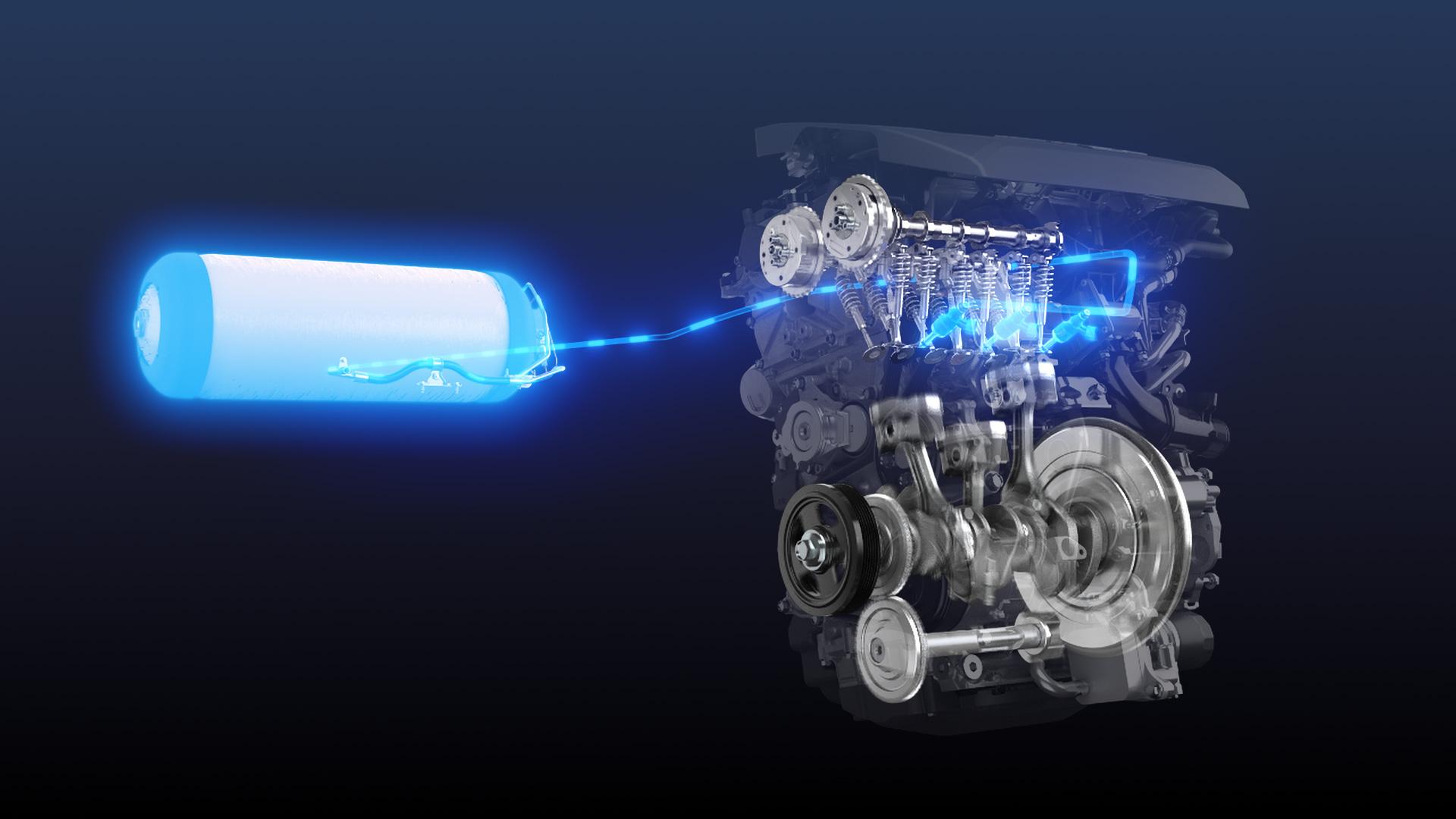
Photo Source/Copyright:
Battery power grabbed every headline for a decade, but Toyota quietly funded a parallel route to zero emissions: one that fills at a pump instead of a plug. That engineering work hasn’t slowed down. In fact, it has accelerated, and the hardware coming out of the lab sits miles away from standard concept-car vaporware.
Two Very Different Machines, One Fuel
Most explainers tend to muddy the waters here, so let’s separate the technology. Toyota approaches hydrogen engineering through two distinct mechanical paths that share almost nothing in common under the hood:
- Fuel Cell Electric Vehicles (FCEVs): Models like the Mirai run hydrogen and oxygen through an onboard fuel cell stack, generating electricity to turn an electric motor while dripping clean water out the back. No plug, no heavy charging cables, and no overnight waiting.
- Hydrogen Combustion Engines: This path burns hydrogen gas directly inside a traditional piston engine. You get the same engine block, crankshaft, and mechanical exhaust note you would expect from a classic gas car. Toyota has campaigned this setup in Japan’s Super Taikyu endurance series, recently running liquid hydrogen chilled down to minus 253 degrees Celsius.
What Endurance Racing Actually Produced
Pounding a car around an endurance track for 24 hours is a brutal way to test parts, which is precisely why Toyota does it. The liquid-hydrogen GR Corolla became the world’s first race car to compete with a superconducting hydrogen pump. Near-zero electrical resistance at sub-zero temperatures delivers equal power output from significantly less current, allowing engineers to shrink physical components.
Engineers also tackled boil-off gas, which is the hydrogen that naturally evaporates inside the tank from ambient heat. By routing that gas through a self-pressurizer, the engine burns the pressure off as fuel instead of venting it into the air. It sounds like a minor detail on paper, but it fixes an enormous headache for anyone trying to store liquid hydrogen at scale.
From the Paddock to the Street
Race testing doesn’t stay trapped in the pit lane. On the production GR Corolla, structural adhesive was extended from 13.9 meters to 32.7 meters total to stiffen the body shell, while a cool-air duct was added to keep intake temperatures down under sustained load. Both modifications trace directly back to hard lessons learned at the Nürburgring and Super Taikyu with the hydrogen prototype.
What Hydrogen Delivers Today
This isn’t purely a laboratory experiment. The practical benefits already show up on real roads:
- Long Range Without Long Stops: The Mirai holds a 402-mile EPA-estimated range rating and refills in roughly five minutes, bringing long-distance road trips back into familiar timeframes.
- Water Vapor Emissions: The fuel cell stack draws ambient oxygen, combines it with hydrogen, and emits nothing but water vapor.
- Cold-Weather Reliability: Compressed hydrogen sidesteps the severe range drops that traditional battery chemistries suffer during hard winter freezes.
- Familiar Maintenance: Hydrogen combustion retains pistons, intakes, and mechanical layouts, meaning standard automotive technicians already understand the core hardware.
Trucks Lead the Next Generation
Toyota’s third-generation fuel cell system doubles the durability of the outgoing unit, reaching benchmarks comparable to diesel engines while improving fuel efficiency by 20 percent for extended cruising range. Commercial rollout targets Japan, Europe, North America, and China.
Freight trucks lead the charge because fleets operate on fixed routes with centralized depots, the exact setup needed to build station density before passenger cars arrive. A hydrogen Hilux truck is slated for 2028 alongside BMW’s first mass-production fuel cell vehicle, which utilizes a co-developed stack.
The Infrastructure Factor
Refueling stations remain sparse, mostly concentrated in California around Los Angeles and San Francisco. To offset that trade-off, regional drivers receive complimentary fuel credits from Toyota. Over 28,000 Mirai vehicles have shipped globally since 2014, while more than 2,700 fuel cell modules now power commercial buses, trains, and stationary generators. Demand generates stations, and infrastructure will follow.
Curious about where Toyota’s hydrogen program goes next? Visit us to explore current electrified models or schedule a test drive today.
More From NYE Toyota
What To Know About Electric Toyota Cars
Photo Source/Copyright: Toyota If you walk onto a dealership lot searching for a sleek electric Toyota sedan, you’ll end up empty-handed. Toyota bet entirely on crossovers for its U.S. battery-electric lineup. That isn’t a drawback; it means command-of-the-road seating, practical hatchbacks, and available all-wheel drive (AWD) across the board. The current lineup centers on…
Corolla LE vs. SE: Which Fits You?
Photo Source/Copyright: Edmunds Choosing between the Toyota Corolla LE and SE often trips up buyers because both sedans share the exact same underlying powertrain. Under the hood of each trim sits a 2.0-liter Dynamic Force four-cylinder engine generating 169 horsepower and 151 pound-feet of torque. That power travels through a Dynamic-Shift Continuously Variable…
Which Toyota Camry Trim Levels Fit You?
Photo Source/Copyright: Toyota Toyota’s decision to transition its midsize sedan exclusively to a hybrid powertrain simplifies shopping considerably. With the V-6 retired and the gas-only versus hybrid decision eliminated, buyers face a clean progression through five distinct trim levels. The primary choices now focus on wheel size, cabin technology, interior materials, and suspension…