

What To Know About Electric Toyota Cars
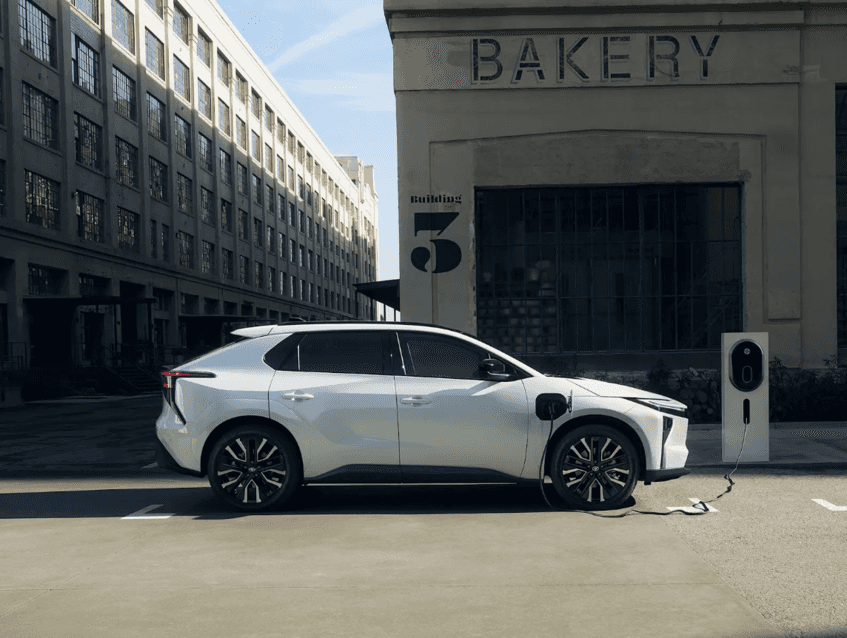
Photo Source/Copyright: Toyota
If you walk onto a dealership lot searching for a sleek electric Toyota sedan, you’ll end up empty-handed. Toyota bet entirely on crossovers for its U.S. battery-electric lineup. That isn’t a drawback; it means command-of-the-road seating, practical hatchbacks, and available all-wheel drive (AWD) across the board. The current lineup centers on three crossovers built on a shared platform, each tuned for a wildly different driver.
| Model | Drivetrain | Max Estimated Range |
|---|---|---|
| bZ | FWD or AWD | 314 miles |
| bZ Woodland | AWD | 281 miles |
| C-HR | AWD | 287 miles |
If you still prefer a gas engine as a backup safety net, Toyota’s plug-in hybrids remain compelling alternatives: the Prius Plug-in Hybrid offers up to 44 miles on pure electricity, while select RAV4 Plug-in Hybrid trims top 50 miles.
bZ: The Daily Anchor
The standard bZ handles the vast majority of real-world commutes. The entry trim packs a smaller battery that keeps pricing accessible for local errands. Step up to the XLE FWD Plus, however, and you unlock a generous 314-mile range.
- Power and Battery: 57.7 kilowatt-hours (kWh) or 74.7 kWh pack; 221 horsepower in front-wheel drive (FWD) or 338 horsepower in AWD.
- Tech: A massive 14-inch touchscreen comes standard on every trim level.
- Charging Speed: An 11-kilowatt (kW) onboard charger handles quick Level 2 home fills.
bZ Woodland: Trail-Ready Utility
For weekend camping and rougher terrain, the bZ Woodland steps in. It punches out 375 horsepower through standard AWD with X-MODE, hitting 60 miles per hour (MPH) in a brisk 4.5 seconds. With 8.4 inches of ground clearance, it clears rutted fire roads without sweating.
Towing caps out at 3,500 pounds, and folding the back seats reveals 74.3 cubic feet of space, more than enough room for camping gear and bikes. Opting for the optional all-terrain tire package trims maximum range from 281 miles down to 260, a minor compromise most outdoor trail regulars will happily accept.
C-HR: Sharp Styling and Punchy Output
The C-HR trades utilitarian boxiness for a swept-back coupe roofline and aggressive stance. Standard AWD delivers 338 horsepower, hitting 60 MPH in a manufacturer-estimated 4.9 seconds. The entry SE trim sits on 18-inch wheels for a 287-mile range.
The top XSE upgrades to 20-inch wheels; while range drops slightly to 273 miles, those wider wheels fill out the wheel arches effortlessly. Cargo space holds strong at 59.5 cubic feet with seats folded flat.
Seamless Charging and Cold-Weather Tech
Charging frustration is largely solved here. All three models feature a native NACS port built directly into the body, granting instant access to Tesla’s Supercharger network without fiddling with adapters.
On DC fast chargers, the battery recharges from 10 percent to 80 percent in about 30 minutes under ideal conditions. Included adapters cover J1772 and CCS plugs, while the electric vehicle (EV) powertrain carries an 8-year/100,000-mile warranty.
To offset winter range loss, Toyota uses heat-pump climate control paired with battery preconditioning. Standard heated front seats and a heated steering wheel warm passengers directly, drawing significantly less energy than heating the entire cabin air.
Frequently Asked Questions
Q: Does Toyota make an electric sedan?
A: Not for the U.S. market. Every current EV in the lineup is a crossover, prioritizing cargo space and higher ride height.
Q: Which electric Toyota goes the farthest?
A: The bZ XLE FWD Plus holds the crown with up to 314 miles of estimated range. A three-row electric Highlander is also on the horizon.
Q: Can Toyota EVs use Tesla Superchargers?
A: Yes. The native NACS port connects directly to Tesla Superchargers, with compatible station navigation integrated into the Toyota app. Come test-drive all three back-to-back to find the right fit for your commute.
More From NYE Toyota
Corolla LE vs. SE: Which Fits You?
Photo Source/Copyright: Edmunds Choosing between the Toyota Corolla LE and SE often trips up buyers because both sedans share the exact same underlying powertrain. Under the hood of each trim sits a 2.0-liter Dynamic Force four-cylinder engine generating 169 horsepower and 151 pound-feet of torque. That power travels through a Dynamic-Shift Continuously Variable…
Top Facts About The Toyota Hydrogen Engine
Photo Source/Copyright: Battery power grabbed every headline for a decade, but Toyota quietly funded a parallel route to zero emissions: one that fills at a pump instead of a plug. That engineering work hasn’t slowed down. In fact, it has accelerated, and the hardware coming out of the lab sits miles away from…
Which Toyota Camry Trim Levels Fit You?
Photo Source/Copyright: Toyota Toyota’s decision to transition its midsize sedan exclusively to a hybrid powertrain simplifies shopping considerably. With the V-6 retired and the gas-only versus hybrid decision eliminated, buyers face a clean progression through five distinct trim levels. The primary choices now focus on wheel size, cabin technology, interior materials, and suspension…